
Guide
What condition grading actually means
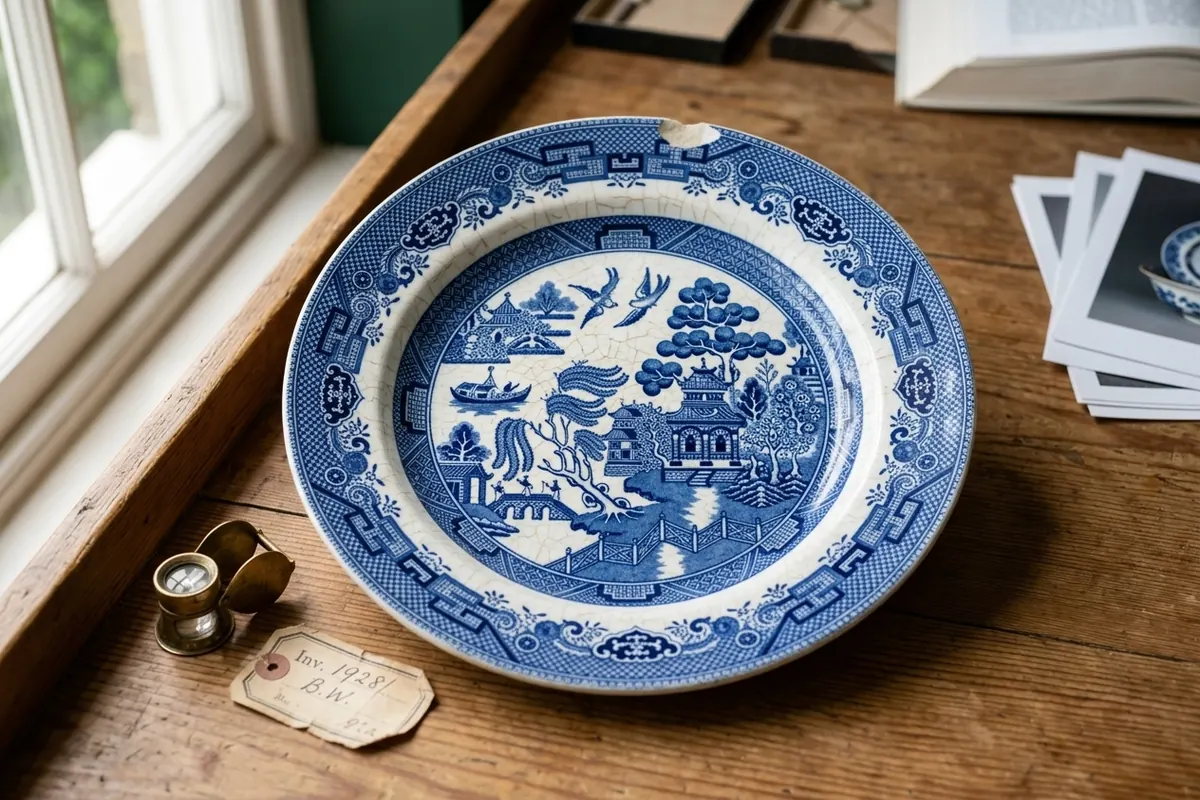
Condition grades have no governing standard, so “excellent” means whatever the person selling has decided it means. The vocabulary underneath the grade is precise and worth learning: a hairline is a crack that has not separated, crazing is a network of fine cracks in the glaze, a marriage is two parts joined that did not begin together. Read the described faults, not the grade.
The grade is the least reliable word in the listing
There is no governing body for antique condition grading. No standard defines “excellent”, nobody audits its use, and the person applying it is usually the person who benefits from applying it generously. Two dealers can describe the same object as “very good” and “fair” and neither is lying, because neither word means anything fixed.
What is fixed is the vocabulary of specific faults. “A 4cm hairline from the rim, stable” is a statement that can be checked and argued with. “Excellent for its age” is not. When you read a listing, skip the grade and go straight to the fault list — and when there is no fault list on an object two hundred years old, that absence is itself the information.
The ladder, and what each rung usually means
- Mint / as new — no wear at all. On anything genuinely old this should make you suspicious rather than pleased: two centuries of existence leave marks, and their complete absence suggests either a piece that was never used, a refinished surface, or a much later object.
- Excellent — normally means minor surface wear consistent with careful use, and no damage. Ask specifically about the rim, the foot and the extremities.
- Very good / good — the useful middle, and the vaguest. It can cover anything from light crazing to a repaired handle. This is the grade that most needs its faults itemised.
- Fair — real damage, disclosed. Often perfectly collectable if the piece is scarce.
- Poor / as found — sold without any condition claim at all. “As found” is not a grade; it is a refusal to give one, and you should assume the worst that the photographs do not rule out.
Ceramics and glass: the words that matter
- Crazing — a network of fine cracks in the glaze only, not the body. It is caused by the glaze and the body shrinking at different rates and it is extremely common on earthenware. On its own it is usually tolerated; heavy staining through the crazing is a different matter, because that is dirt that has entered the body and will not come out.
- Hairline — a crack that has not separated. Run a fingernail across it: if it catches, it is through the body.
- Star crack — radiating cracks from a single impact point, usually on a base. Caused by a knock; structurally worse than it looks.
- Chip, flake, fritting — material actually lost. Fritting is the fine roughness along a rim from years of stacking, and is minor. A chip on a plain rim is minor; the same chip through a gilded or moulded edge is not, because the decoration cannot be restored invisibly.
- Restoration / overpaint — the fault has been repaired and hidden. Restoration fluoresces under UV light, which is why dealers carry a torch.
Silver and metalwork
- Over-polishing is the commonest damage to silver and the least often disclosed. Decades of enthusiastic cleaning soften the crispness of engraving and can wear the hallmarks to illegibility. A piece described as having “lovely bright colour” is sometimes a piece that has been polished thin.
- Erased engraving — a former owner’s crest or monogram removed. It leaves a slight dish in the surface, visible when you tilt the piece against the light, and it reduces both value and the piece’s history.
- Plating wear — on plated wares, copper showing through on the high points. Honest wear, but it caps the value firmly.
- Repairs at stress points — the handle join, the hinge, the foot. A soft-solder repair (dull grey, slightly gummy-looking) is a proper fault; a professional silver-solder repair is much less so.
Furniture: marriages, associations and replacements
Furniture has its own vocabulary for pieces that are not quite what they seem, and it is worth knowing because the words are used precisely by people who know and vaguely by people who do not.
- A marriage is two separate pieces joined into one — a bureau top from one object on a base from another. Look for a mismatch in timber, colour, moulding profile or depth at the join.
- Associated means the same, more politely, usually for a piece and its stand.
- Replaced handles, feet or castors are extremely common and largely forgiven, provided they are declared. Look for redundant screw holes behind the current fittings.
- Re-veneered or re-polished — see dating antique furniture: the original surface carries much of the value, and stripping it removes evidence of age along with the patina.
- Worm — old, inactive flight holes are ordinary. Fresh, pale holes with powder beneath them mean live infestation, which is a problem for the rest of your house before it is a problem for the piece.
What condition actually costs
There is no fixed percentage, and anyone quoting one is guessing. What holds is the relationship: the more common the object, the more condition matters. A chipped example of something with a thousand surviving examples competes with nine hundred and ninety-nine better ones, and is worth very little. A chipped example of something with four known survivors is still one of four.
The second rule: damage to the decorated or functional part costs far more than damage elsewhere. A hairline through the painted reserve of a plate is severe; the same hairline in the plain underside is not. A crack across a clock dial is severe; a scratch on the case back is not.
This is also why a valuation from photographs is a range rather than a figure — the condition evidence in an image is real but partial. What moves the value of an antique covers the other factors that widen or narrow it.
Photographing condition honestly
If you are describing a piece to a buyer, an insurer or an app, photograph the faults deliberately rather than hoping they will not show. Raking light — a lamp low and to one side — makes crazing, hairlines and surface dishing visible in a way flat overhead light hides completely. Shoot the fault twice: once close, once in context so its scale is clear. How to photograph an antique covers the rest of the sequence.
Common questions
What does crazing mean on porcelain?
Crazing is a network of fine cracks in the glaze only, not through the body of the piece. It is caused by the glaze and the body shrinking at different rates and is very common on earthenware. On its own it is usually accepted; brown staining that has soaked through the crazing into the body is harder to forgive and cannot be cleaned out.
Is a restored antique worth less than an undamaged one?
Almost always, but how much less depends on rarity. On a common object, restoration can remove most of the value because undamaged examples are easy to find. On a scarce object, a well-documented professional restoration may cost relatively little, because the alternative is not owning one. Undisclosed restoration is treated far more harshly than disclosed restoration.
What does “as found” mean in an auction listing?
It means the piece is being sold with no condition claim whatsoever, and the auctioneer accepts no responsibility for faults. It is not a grade but a refusal to give one. Assume any damage the photographs do not positively rule out, and view the lot in person if the value justifies the trip.
Trove identifies antiques from photographs and gives an estimated value range, with the reasoning behind it. Every figure is an AI estimate, not a professional appraisal.
Last updated: · Research and corrections policy