
Guide
What actually moves the value of an antique
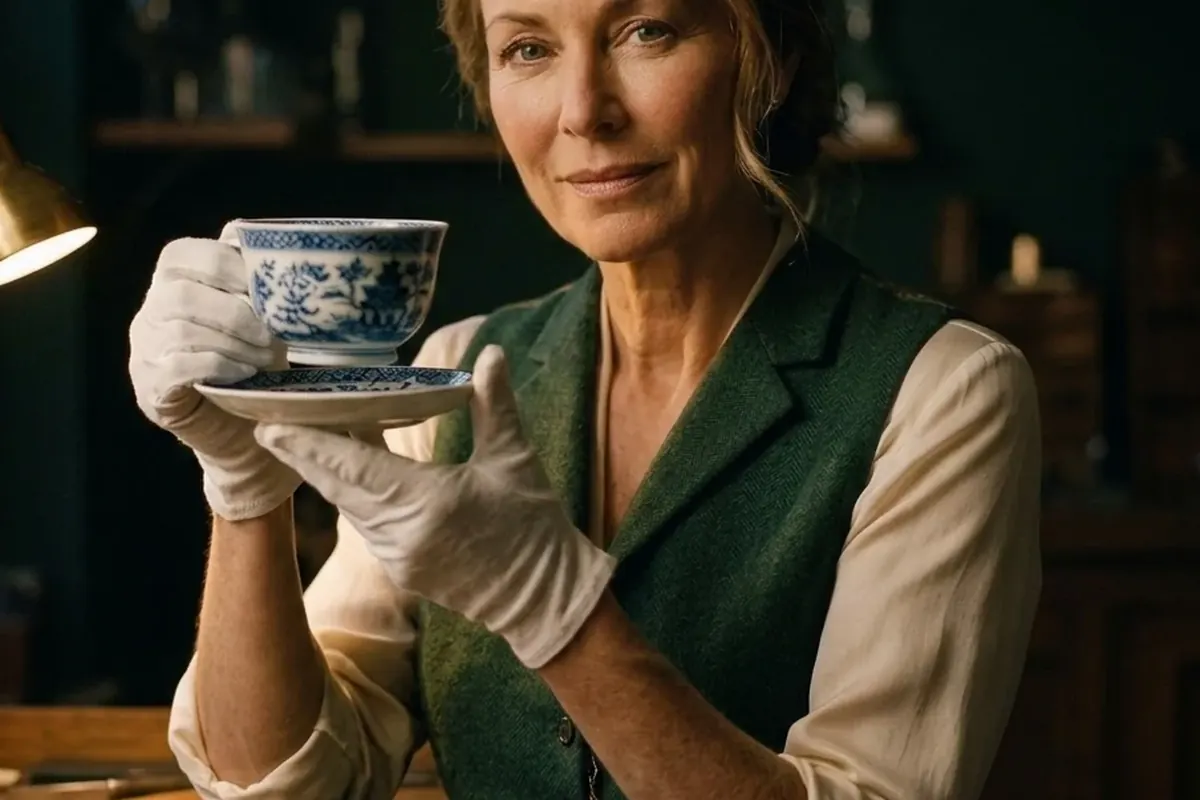
Six things set the price: condition, rarity, provenance, completeness, maker, and where you sell. Condition moves it most and is the one people underestimate — a hairline crack or a stripped surface can remove most of the value from an otherwise good piece. Age, on its own, moves it least: old and common is still common.
Condition — the one that surprises people
The gap between “excellent” and “good with a hairline” is routinely half the value, and on decorative pieces where the whole point is that it is perfect, it can be more. This is the factor owners consistently expect to matter less than it does, because a small chip on the foot rim is not what they see when they look at the object.
Restoration is priced in when it is declared and discounted hard when it is discovered. And the damage that owners do themselves — polishing away patina, stripping a finish, scrubbing a gilt edge before photographing it — is permanent. If you take one thing from this page: do not clean it before it has been valued.
Rarity, which is not the same as age
A great deal of Victorian and Edwardian production was enormous, and survives in quantity. Common Victorian pieces are old and inexpensive at the same time, and there is no contradiction in that. What is scarce is what was made briefly, made badly enough that few survived, made for a small market, or made in a form that did not suit later taste and got thrown away.
Provenance
The documented history: receipts, a catalogue entry, a letter, a house sale. It is the only factor entirely outside the object, and on the right piece it multiplies rather than adds. It is also the factor most often thrown away — the box, the paperwork and the family note are exactly what people discard when clearing a house.
Completeness
Lids, keys, stoppers, original handles, the pair, the box, the case. A teapot with its lid and a teapot without are not the same object in the market’s eyes, and a single item from a set is worth far less than its share of the set. Original fittings matter more than owners expect; replacements are visible to anyone who handles the piece.
Maker and attribution
A known workshop, a marked and dated piece, an identifiable factory — each narrows the uncertainty, and the market pays for certainty. This is why a legible mark is worth so much more than a good guess, and why photographing the mark properly is the single most useful thing you can do.
Where and when you sell
The same piece brings different money at a general saleroom, a specialist sale, a dealer’s shop and an online marketplace, because each has a different audience and a different cost of reaching it. Taste moves too: brown furniture has been out of fashion for two decades and mid-century design has been in, and neither of those is a fact about the objects.
What moves it least
Age by itself. “It has been in the family for a hundred years” establishes that it is old, and says nothing about whether anyone wants it. So does the price someone paid for it in 1985 — that was a different market, and past price is not evidence of present value.
Common questions
Does a crack ruin the value of an antique?
It reduces it, often by half or more, and how much depends on what the object is for. On a purely decorative piece, damage is nearly the whole story. On something rare or historically important, a fault is tolerated far better because there is no undamaged alternative to buy instead.
Is an older antique worth more?
Not by itself. Age sets the category; rarity, condition and demand set the price. A common Victorian piece and a scarce 1950s one can be a hundred years apart with the later one worth considerably more.
Trove identifies antiques from photographs and gives an estimated value range, with the reasoning behind it. Every figure is an AI estimate, not a professional appraisal.
Last updated: · Research and corrections policy