
Guide
How to date antique furniture by how it was made
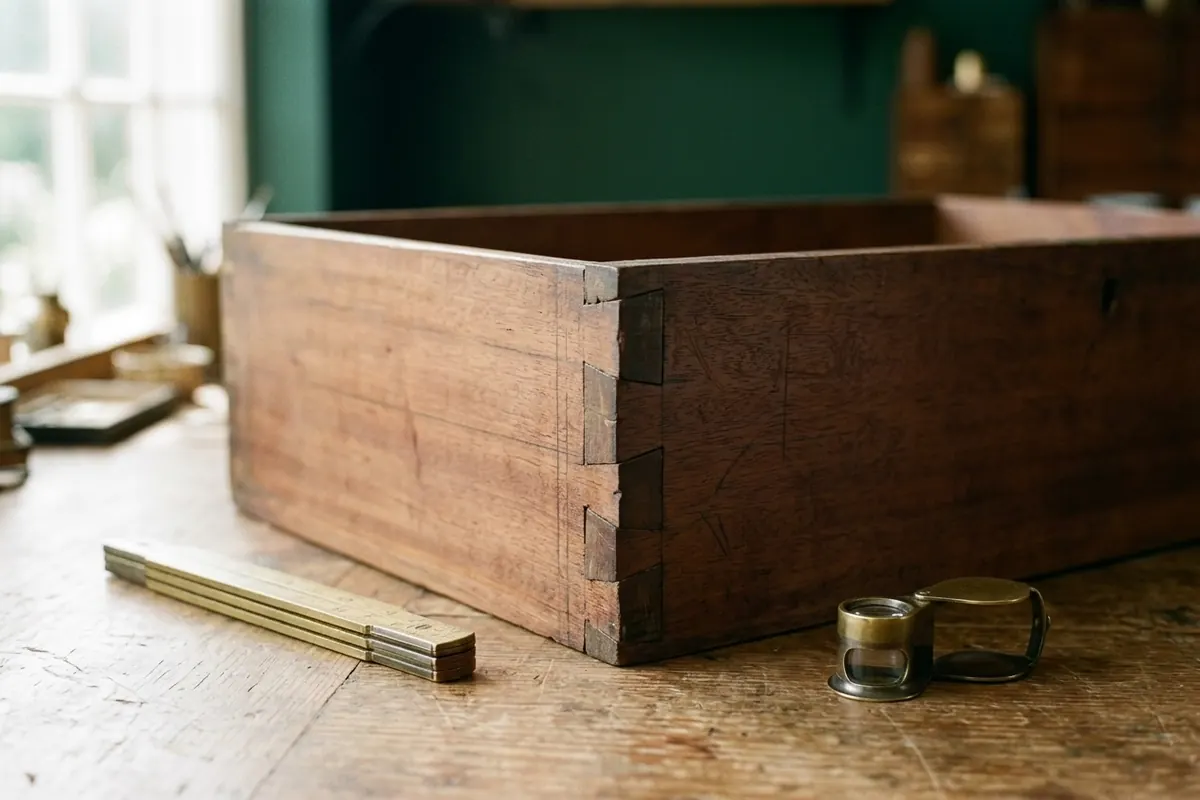
Date furniture from its construction, not its style — styles were copied continuously, methods were not. Hand-cut dovetails are few and uneven; machine ones are many and identical. Straight even saw marks mean a circular saw, and irregular angled ones a hand saw. Old wood shrinks across the grain, so a genuinely old round tabletop is no longer round.
Look underneath and behind first
The front of a piece is where the cabinetmaker performed and where the copyist concentrated. The back, the underside and the inside of the carcass are where nobody bothered — and that is where the evidence survives. Turn a drawer over. Pull it out and look at the sides, the back and the runners. Look at the underside of a seat rail and the back panel of a chest.
Dovetails
Hand-cut dovetails are few, wide, slightly uneven, and different from one another, because a person cut each one. Machine-cut dovetails are many, narrow, evenly spaced and identical, because a jig cut them all. Machine dovetailing arrives in quantity in the second half of the nineteenth century, so identical dovetails on a supposedly Georgian chest are conclusive.
A related tell: on hand-cut work the scribe line the maker marked to depth is often still visible.
Saw marks
- Straight, evenly spaced, parallel marks — a machine saw, and after roughly the 1830s.
- Curved arcs — a circular saw, later still.
- Irregular, slightly angled, uneven marks — a hand saw, and consistent with early work.
Look on the underside and the back, where nobody planed the marks away.
Screws, nails and fittings
Early screws were made by hand: blunt-ended, with an irregular thread and a slot that is often off-centre or not quite straight. Machine screws — sharp point, perfectly even thread, centred slot — are a nineteenth-century development and increasingly precise after it. Similarly, hand-forged nails are square-sectioned and irregular; wire nails are round and modern.
A caution: fittings are the most-replaced part of any piece. Modern screws throughout means rebuilt or reproduction; a few modern screws among old ones means a repair, which is ordinary.
Shrinkage — the tell that cannot be faked
Wood loses moisture across the grain for its whole life and barely along it. So a round table top made two centuries ago is now measurably oval, a turned column is no longer perfectly circular in section, and drawer bottoms have opened small gaps. A perfectly circular old top has either been re-cut or is not old.
Surface and finish
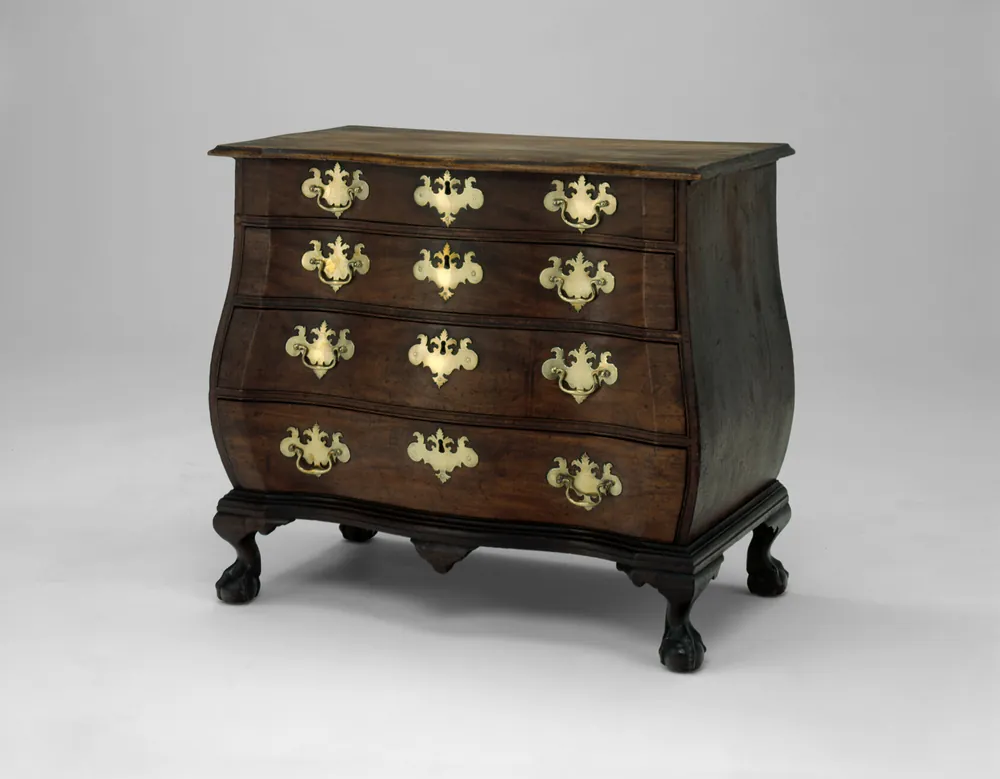
- Patina builds unevenly: darker where hands did not touch, lighter and smoother where they did. Even colour over an entire piece suggests a modern finish.
- Wear belongs where use put it — the front edge of an arm, the stretcher a foot rested on, around a keyhole, the leading edge of a drawer. Wear on a surface nobody touches is decoration, not history.
- Finish type: shellac and wax are early; a hard, plastic-looking film is modern lacquer or polyurethane, and on an old piece means it has been refinished — which usually costs value.
Style dates the design, not the object
Georgian, Regency, Victorian and Edwardian forms have all been made continuously since they were new. A “Georgian” chest can be Georgian, a Victorian revival, an Edwardian reproduction or last year’s. Style tells you the earliest the design could exist; construction tells you when this particular object was built. When the two disagree, believe the construction.
And where they cannot be reconciled from photographs — which happens often with early furniture — that is the point to get it handled. When you need a professional appraiser covers where that line falls.
Common questions
How can you tell if furniture is antique or reproduction?
Turn it over and look at the joints, the saw marks and the screws. Uneven hand-cut dovetails, irregular saw marks, hand-made screws and wood that has shrunk across the grain indicate age. Identical machine dovetails, even saw marks and uniform modern screws indicate a later piece however convincing the style is.
Does refinishing reduce the value of antique furniture?
Usually, and often substantially. The original surface is part of what buyers are paying for, and stripping it removes evidence of age along with the patina. Cleaning and waxing is fine; stripping and re-polishing is generally not.
Trove identifies antiques from photographs and gives an estimated value range, with the reasoning behind it. Every figure is an AI estimate, not a professional appraisal.
Last updated: · Research and corrections policy