
Guide
How to tell a reproduction from a period piece
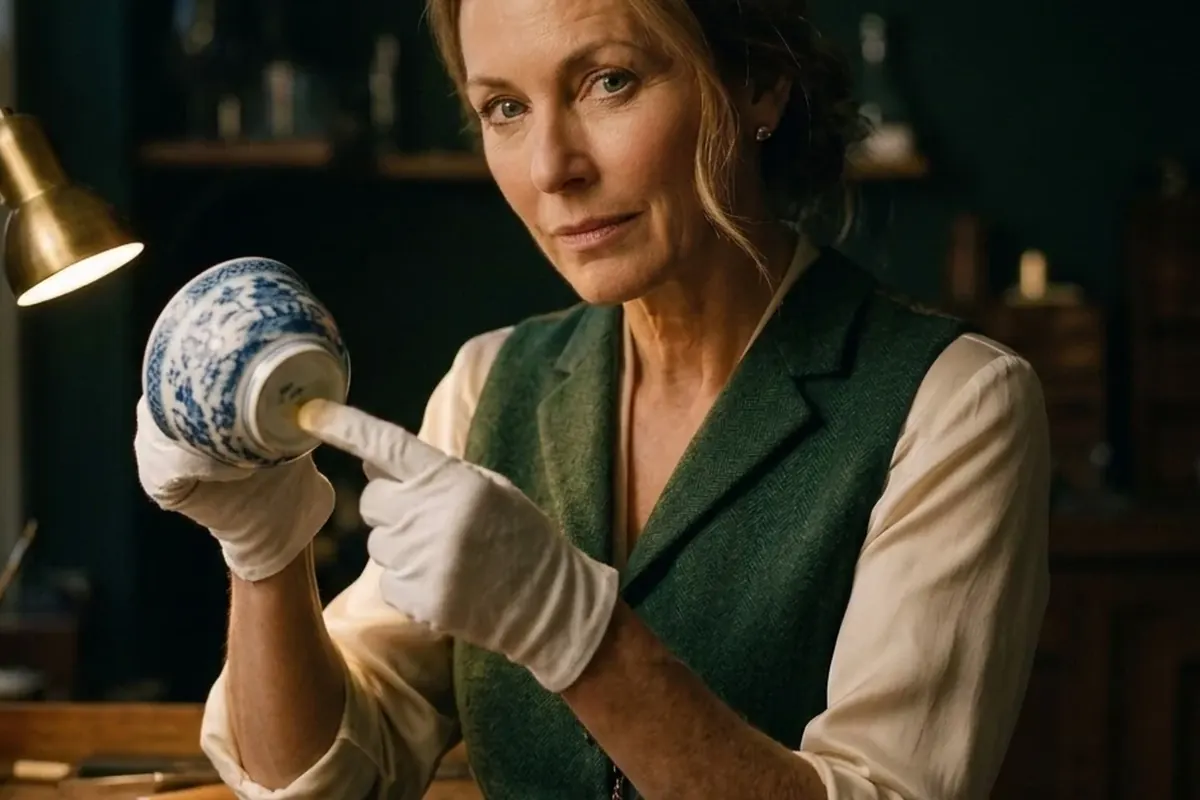
Reproductions are usually given away by construction and wear rather than by style. Look for machine-cut joints and even saw marks, wear in places handling would never touch, a base too clean and too white, screws and fittings that are too modern, printing dots where hand-painting should be, and marks that copy a famous factory but get a detail slightly wrong.
Style is the easiest thing to copy
Start from the assumption that the look proves nothing. A shape can be reproduced perfectly and has been, continuously, since the objects themselves were new — Victorian factories copied Georgian forms, the 1920s copied the Victorians, and a workshop copied all of it last year. What is hard to fake is how a thing was made and what a century of being used does to it.
Construction
- Saw marks. Straight, evenly spaced marks mean a circular or band saw — machine work. Irregular, slightly angled marks mean a hand saw. On the underside and back where nobody tidied up, they survive.
- Joints. Hand-cut dovetails are few, uneven and slightly different from each other. Machine dovetails are many, identical and perfectly spaced.
- Screws and fittings. Modern screws have a sharp, even thread and a perfectly centred slot; early ones are blunt, irregular and often off-centre. A period piece with modern screws throughout has either been rebuilt or was never period.
- Shrinkage. Old wood moves across the grain. A circular tabletop that is still perfectly circular after two hundred years is telling you something.
Wear in the right places
This is the tell that is hardest to fake convincingly, because it requires deciding where a hand would have gone. Wear belongs where the object was touched, lifted, set down and cleaned: the front edge of a chair arm, the foot rim, the handle, the area around a keyhole. Artificial ageing tends to be distributed evenly, or applied where it is visible rather than where it would have happened. Even wear on a surface nobody touches is not wear; it is an effect.
Surface and decoration
- Printing dots. Under magnification, a transfer-printed pattern resolves into dots or a screen. Hand-painting resolves into brush strokes with varying pressure. This single check settles a great many ceramics.
- Crazing. Age crazing is fine, irregular and dirt has worked into it over time. Fake crazing is usually too even, and the staining sits on top rather than in it.
- A base too clean. An unglazed foot rim collects a century of grey. A bright white one on a supposedly Georgian piece is the most common single giveaway.
Marks that are almost right
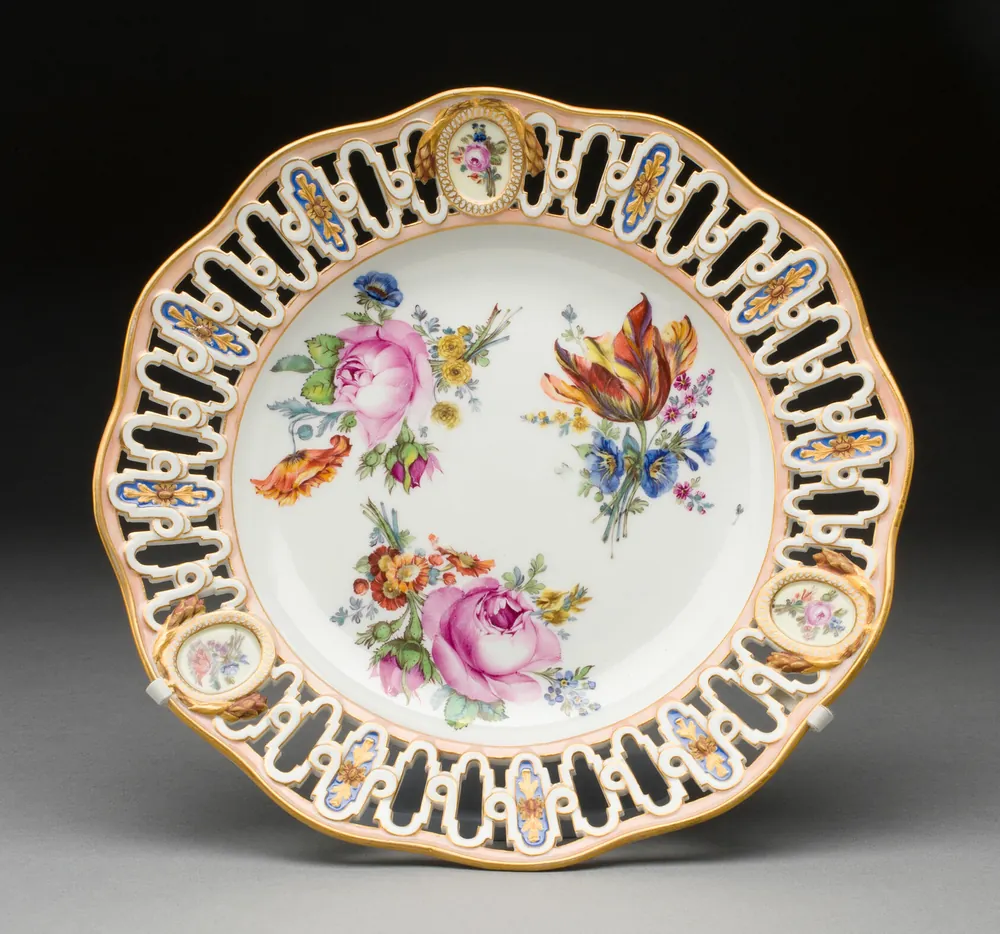
Famous factory marks have been copied for as long as they have been worth copying, and the copies are usually slightly wrong: a crossed-swords mark with the wrong angle or an extra line, a printed mark where the period piece was impressed, a mark in a style the factory only used decades later, or an English word — “Bavaria”, “Made in Germany”, “Nippon” — that customs rules only required after a particular date.
A mark is evidence, not proof. Read it with the construction and the wear, and when the three disagree, the mark is the one lying.
When you cannot tell
Plenty of pieces cannot be settled from a photograph, and a confident answer on a doubtful object is worth less than an honest “this needs handling”. The categories where this is most often true — early furniture, Chinese ceramics, bronzes — are also the ones where being wrong is most expensive. That is the point at which the piece goes to someone who can pick it up.
Common questions
How can you tell if furniture is really antique?
Look underneath and behind. Hand-cut dovetails that differ from each other, irregular saw marks, wood that has shrunk across the grain, and wear only where hands went. Machine-perfect joints, even saw marks and uniform wear indicate a later reproduction however convincing the style is.
Does a maker’s mark prove a piece is genuine?
No. Famous marks are the most copied thing about famous factories. A mark is one piece of evidence, and when it disagrees with the construction and the wear, the mark is usually the part that is wrong.
Trove identifies antiques from photographs and gives an estimated value range, with the reasoning behind it. Every figure is an AI estimate, not a professional appraisal.
Last updated: · Research and corrections policy