
Guide
How to read Staffordshire pottery marks
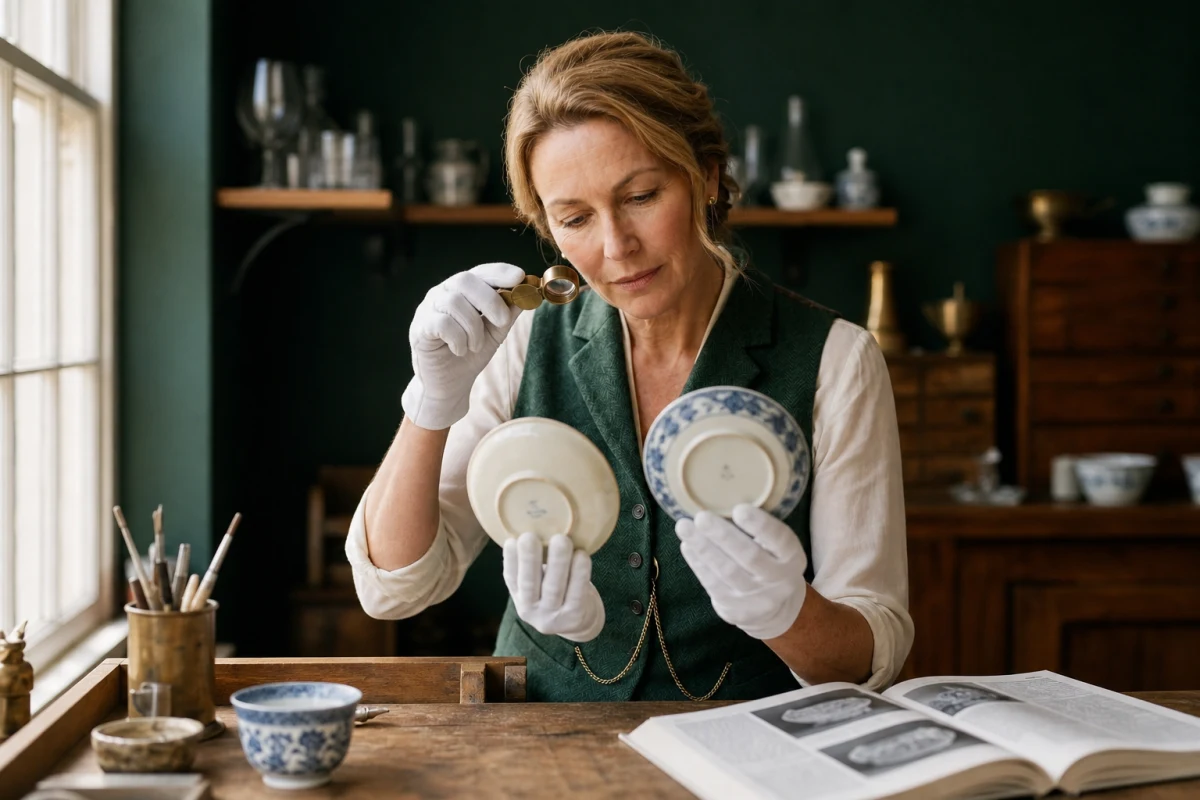
Start with the backstamp, but do not date Staffordshire pottery from the name alone. Record every word, symbol, pattern number and registration mark, then match the exact trading style — Spode, Copeland & Garrett, Copeland, Minton, Wedgwood or Davenport — to a documented factory period. Confirm it against the body, printing method, shape and decoration, because marks were reused and many early wares were unmarked.
Staffordshire is a place, not a single factory
“Staffordshire pottery” covers wares made across the Potteries — Stoke, Burslem, Hanley, Longton, Tunstall and Fenton — by hundreds of businesses over more than two centuries. It is not one body, one style or one standard of quality. A blue transfer-printed plate, a majolica jug, bone china and a plain creamware dish can all be Staffordshire.
The underside is therefore evidence, not an automatic answer. Start by copying the mark exactly, including punctuation, crowns, knots, initials and small words such as England. Do not expand initials until the rest of the object supports the identification.
Read how the mark was applied
- Impressed marks are pressed into the clay before firing. Hold the base in raking light; a shallow impression disappears under flat light.
- Transfer-printed backstamps sit under or over the glaze and often carry the factory, pattern and later registration information together.
- Painted numbers and letters are commonly pattern, decorator or workman’s references. They are useful when matched to an archive but are not dates by themselves.
- Embossed marks can be part of the mould. Check that wear and glaze settle into them naturally rather than appearing freshly cut.
Photograph the mark twice: one close image for reading it, and one wider image showing the whole base, foot rim and body. The clay colour and foot construction often settle what an isolated backstamp cannot.
The trading style is the dating evidence
Factory histories are sequences of partnerships, owners and trading names. The exact words matter more than the famous surname.
Spode and Copeland
Josiah Spode I acquired the Stoke factory in 1776, but the Spode Museum Trust notes that many early Spode wares were unmarked. Later names are more diagnostic: Copeland & Garrett belongs to the partnership of 1833–1847, while later Copeland and revived Spode marks belong to different phases. A mark reference should show the whole device, not only the surname.
Minton
The British Museum’s Minton record traces the factory from Thomas Minton’s foundation in the 1790s through changing styles: Minton & Co was adopted in 1845, while Mintons was used for the china works from about 1873. Those names create useful ranges, but a copied name on a reproduction is still only a copied name.
Wedgwood
An impressed WEDGWOOD is valuable evidence when the body, shape and workmanship agree with it. It is also among the most copied names in ceramics. Inspect the depth and age of the impression, the quality of the jasper or earthenware body, and any separate potter’s or date codes rather than treating the surname as authentication.
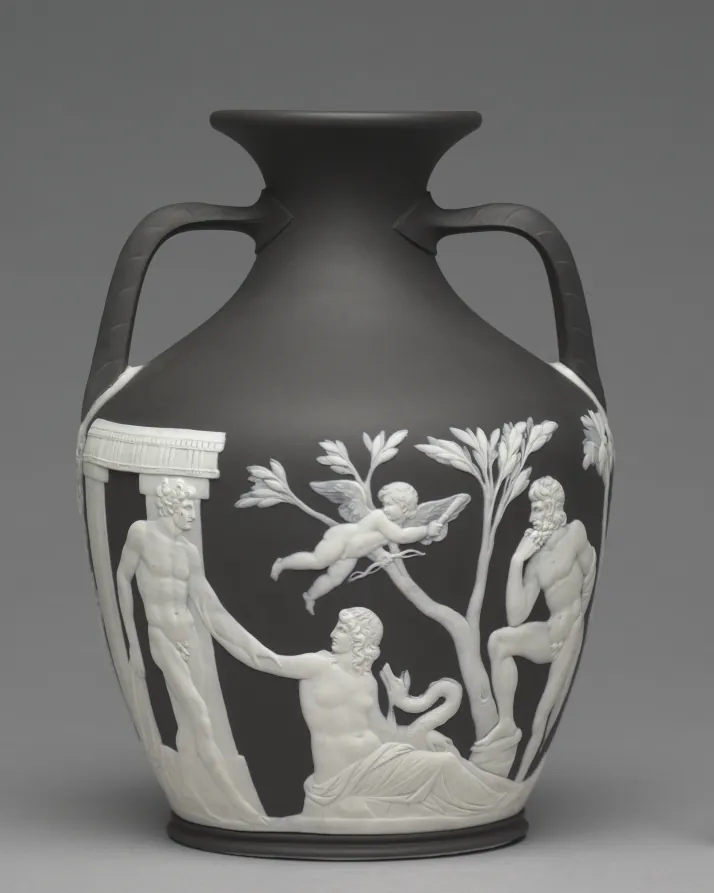
Davenport, Meigh and the wider Potteries
Do not stop at the largest names. Davenport at Longport, Charles Meigh & Son at Hanley, Ridgway, Alcock and scores of smaller concerns made export wares now found around the world. Ceramics recovered from the wreck of the Josephine Willis, sunk in 1856, include backstamped Davenport, Charles Meigh and Armitage pieces; Stoke-on-Trent’s museum account is a useful reminder that an exact mark can connect an object to a documented date and trade route.
Pattern numbers and registration marks
A painted or printed pattern number identifies a design within a factory’s own system. It becomes a date only when matched to that factory’s pattern books. Different firms could use the same number, and a pattern might be reissued.
A diamond registration mark or an Rd No belongs to the national design-registration system instead. It dates legal protection for the design and may name a proprietor in the surviving record. It does not prove when this individual piece left the kiln. See how to read a British registered design mark before turning the number into a manufacturing date.
Confirm the mark against the object
- Body: earthenware, stoneware, bone china or porcelain; note its colour, translucency and weight.
- Method: hand-painted, transfer-printed, moulded, tube-lined or lithographed.
- Shape: compare the actual mould and foot, not only the decoration.
- Condition: check whether the wear crosses the mark naturally and whether the base has been ground, restored or re-marked.
- Reference: confirm the exact device in a factory archive, museum catalogue or Geoffrey Godden’s Encyclopaedia of British Pottery and Porcelain Marks.
If the name gives one date and the body or printing method gives another, do not average them. One of the clues has been misread, the mark was reused, or the piece is a later copy. That disagreement is the result that deserves more research.
Common questions
Does “Staffordshire” on pottery identify the maker?
No. Staffordshire names the manufacturing region, which contained hundreds of potteries, not a single factory. The useful evidence is the complete backstamp, trading name, initials, pattern number and registration mark, checked against the object’s body and method of decoration.
Can a pottery backstamp give an exact date?
Sometimes it gives a useful range, especially when a partnership or trading style lasted only a few years. A registered-design mark can give an exact design-registration date. Neither automatically gives the manufacturing date of the individual piece, so the body, shape and decoration still have to agree.
Trove identifies antiques from photographs and gives an estimated value range, with the reasoning behind it. Every figure is an AI estimate, not a professional appraisal.
Last updated: · Research and corrections policy