
Guide
How antique provenance is documented
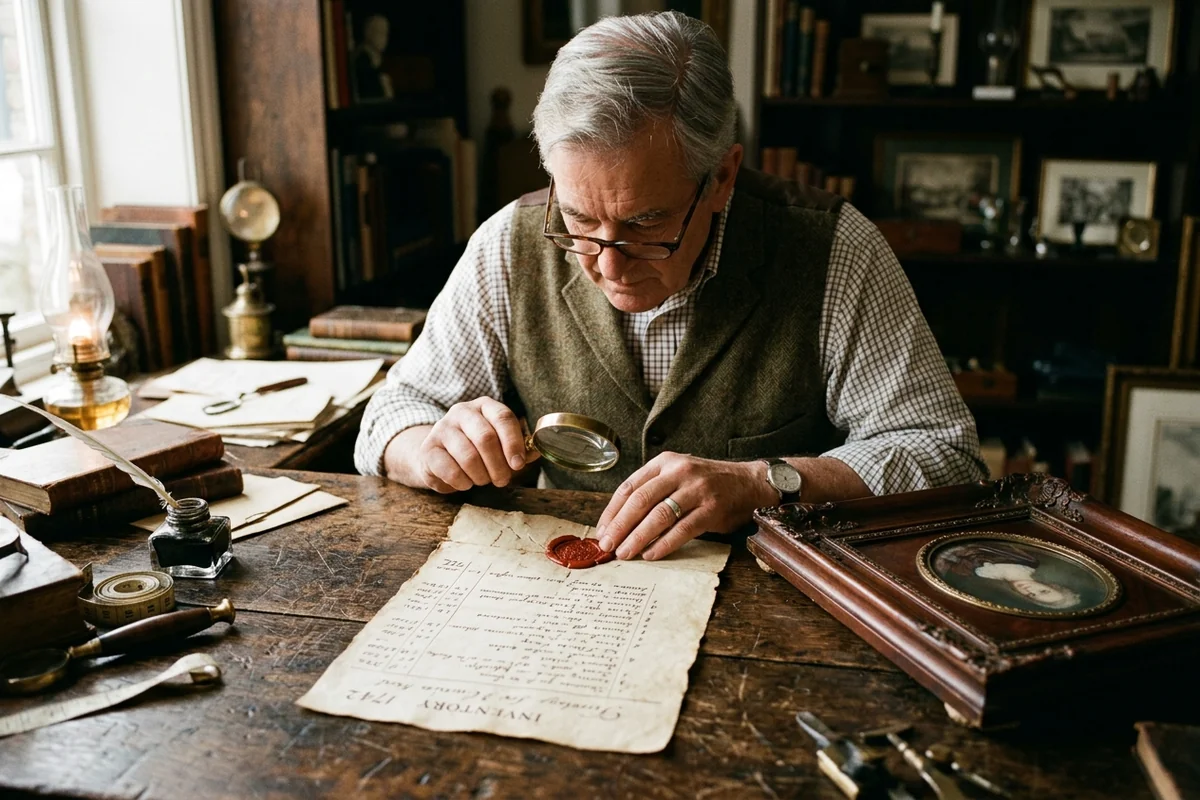
Antique provenance is the verifiable chain of ownership linking an object back to its maker, commission, or early collection. Genuine proof consists of primary documents: original bills of sale, named estate inventories, period wills, exhibition catalogues, and tamper-resistant auction or museum labels still affixed to the piece. Family lore, verbal traditions, and undated handwritten notes do not constitute legal or commercial provenance.
Provenance is a chain, not an anecdote
In the antiques trade, the word “provenance” is frequently abused. Family recollections, verbal stories told at an estate sale, or an undated note scribbled in ink on the back of a drawer are often presented as history. To a professional appraiser, museum curator, or major auction house, these are anecdotes, not provenance.
True provenance is a continuous, verifiable paper trail that documents an object’s custody from the workshop or original commissioning patron down to the present day. When established by primary sources, it transforms an anonymous decorative object into an authenticated historical document — and can multiply its market valuation tenfold.
The hierarchy of evidence: what actually counts
Not all documents carry equal evidentiary weight. Professional cataloguers rank documentation across five distinct tiers:
- Primary legal and transaction records. The gold standard. Contemporaneous bills of sale from known cabinetmakers or silversmiths, receipted trade invoices, itemised probate court inventories, and notarised estate wills specifying the exact piece.
- Exhibition and museum loan records. Published exhibition catalogues (such as the Great Exhibition of 1851 or museum retrospectives) with documented loan receipts and accession entries.
- Historical auction house records. Inscribed lot numbers or stencils matching surviving ledgers of Christie’s (founded 1766), Sotheby’s (1744), or historic country house clearance sales.
- Literature and catalogue raisonné citations. Inclusion in authoritative monographs, academic journals, or the definitive published catalogue of an artist or maker.
- Photographic and correspondence archives. Dated period photographs showing the object in situ in a known historic interior, alongside family diaries or letters detailing its acquisition.
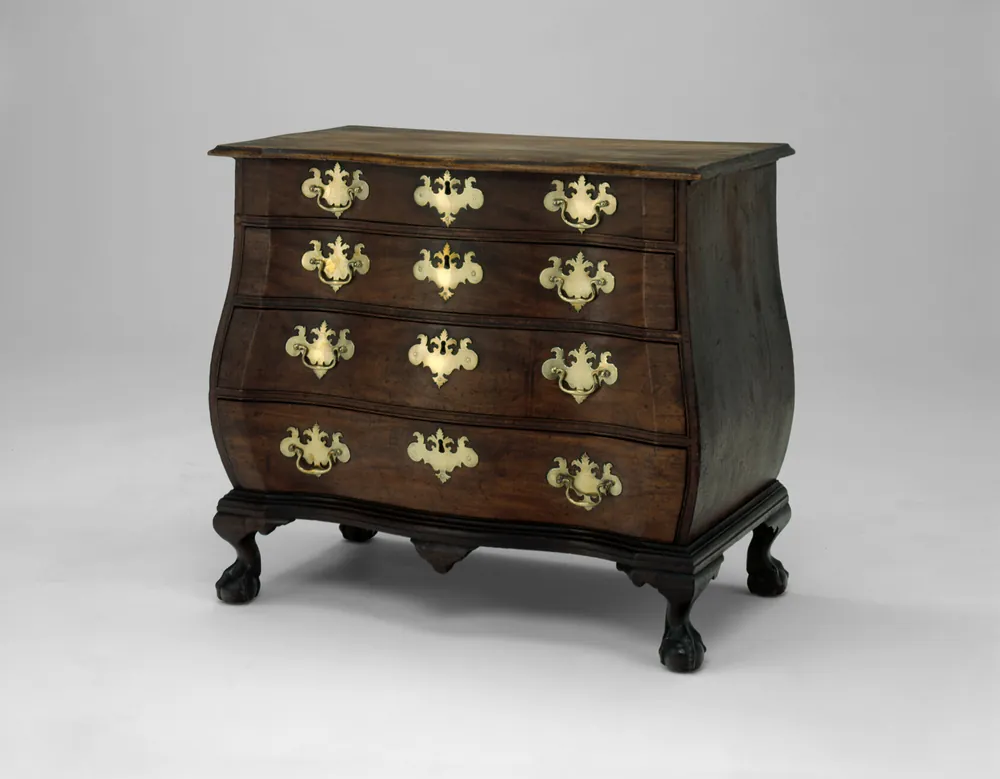
Physical labels, stencils, and seals on the object
Much of the best evidence survives directly on the underside, reverse, or interior surfaces of the object itself. Never clean, remove, or scrape away these physical markers:
- Auction house stencils. From the nineteenth century onwards, British auction houses like Christie’s stamped distinctive black stencilled inventory codes (typically one to four digits followed by a capital letter) onto the back of stretcher bars or mahogany backboards. These codes correlate directly to surviving auction house sale books.
- Armorial wax seals. Red or black sealing wax bearing heraldic crests on antique silver, snuffboxes, or picture frames. An armorial seal identifies the noble family or patron who sealed the piece before 1850.
- Depository and pantechnicon labels. Printed paper labels from historic shipping, storage, and carriage firms (such as The Pantechnicon in Belgrave Square). They preserve client names, consignment dates, and transport routes through Victorian and Edwardian estates.
- Chalk inscriptions and paper tags. Cabinetmakers, auctioneers, and packers frequently inscribed lot numbers or customer names in chalk on unfinished drawer bottoms and backboards.
Common red flags and manufactured provenance
Because documented history adds immense financial value, dishonest sellers regularly fabricate provenance. Watch for these common warning signs:
- Artificially aged paper. Receipts stained with tea or baked in an oven to produce yellowed, brittle edges. Under magnification, the ink will feather unnaturally on modern wood-pulp paper.
- The “association” sleight of hand. Statements such as “from the estate of a gentleman who served Lord Nelson” or “identical to the table in the governor’s mansion.” Association is not ownership; unless the document places the exact physical object in that collection, it has zero provenance value.
- Transferred or married labels. Original nineteenth-century labels peeled off damaged, valueless objects and glued onto unassociated period or reproduction pieces. Inspect label edges under UV light for fresh adhesives, halos, or disturbed patination.
- The unbridgeable gap. A bill of sale from 1780 followed by complete silence until an estate sale in 2015. A 235-year gap in the chain requires corroborating evidence before claiming unbroken descent.
How to build and preserve provenance today
Provenance begins the moment you acquire an antique. Maintain an archival dossier for every meaningful object:
- Keep all original purchase invoices, receipts, auction catalogue cut-outs, and condition reports.
- Photograph all markings, stamps, labels, and construction joints in high resolution before any conservation work is done.
- Document any professional restoration with written treatment reports from conservators.
- Store physical documents in acid-free archival sleeves rather than taping or gluing them directly to the object.
If you have inherited or acquired an object with complex or incomplete documentation, learn how to research an antique yourself or consult a certified appraiser when significant value or insurance coverage is at stake.
Common questions
What makes a provenance document legally credible for an antique?
A credible provenance document is a contemporaneous primary record naming the specific object, buyer, date, and transaction price. Original bills of sale from known dealers, probate court inventories, estate wills, and documented auction catalogue entries provide verifiable legal standing. Modern affidavits or undated handwritten statements carry negligible weight in court or major auction houses.
Can an antique have substantial value without documented provenance?
Yes. Most genuine antiques survive without written papers, deriving value from intrinsic qualities: authenticity of materials, rarity, condition, artistic merit, and verifiable maker marks or hallmarks. However, for museum-grade masterpieces or contentious attributions, documented royal, aristocratic, or celebrated collection provenance can multiply market value many times over.
How do auction houses verify old collection labels and inventory tags?
Specialists examine paper stock, glue composition, ink degradation, and printing methods under ultraviolet light and magnification to confirm the label matches the object’s age. They cross-reference printed lot numbers or stencilled inventory codes against surviving historical auction house archives to confirm the date, consignor, and hammer price recorded in their ledgers.
Trove identifies antiques from photographs and gives an estimated value range, with the reasoning behind it. Every figure is an AI estimate, not a professional appraisal.
Last updated: · Research and corrections policy