
Guide
Can you trust an AI antique valuation?
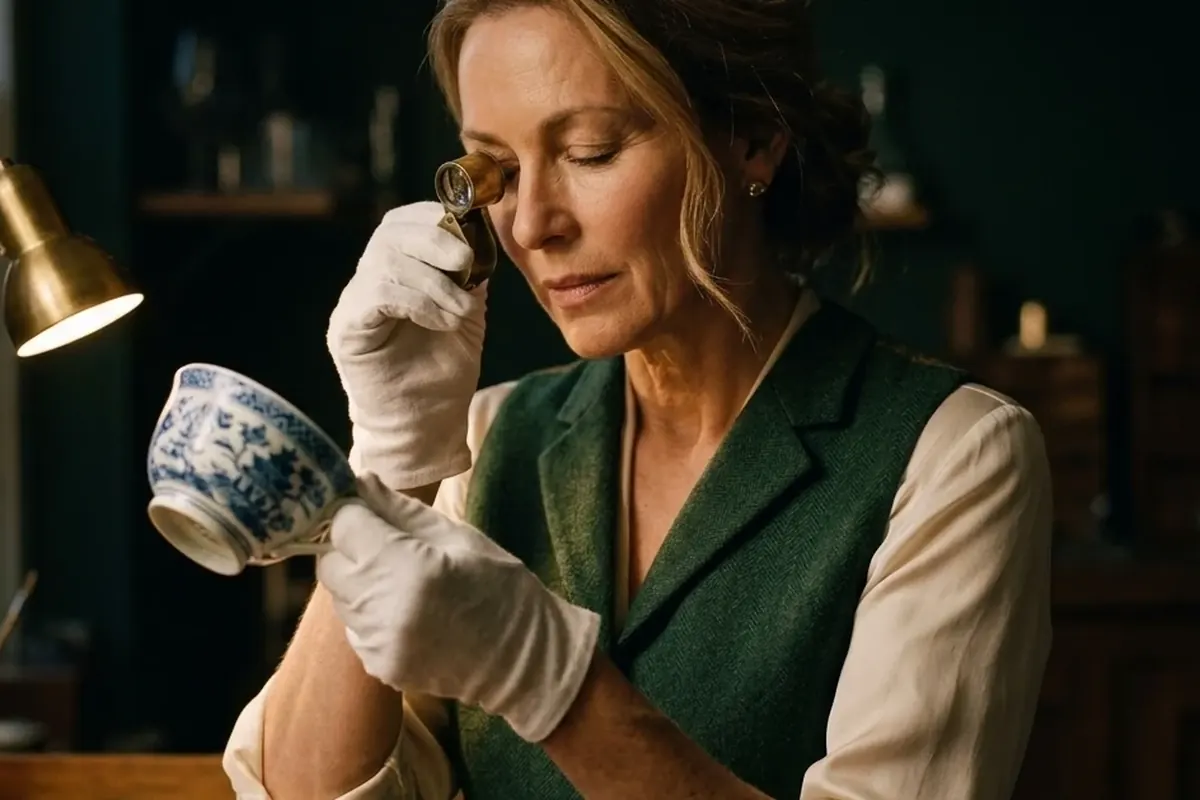
An AI valuation read from photographs is a well-informed starting point, not a settled figure. It can identify a piece, read a mark and place a period from images alone. It cannot handle the object, feel weight, test metal or verify provenance — so treat its range as triage, and get a piece seen in person before any money or paperwork depends on the number.
What it is actually doing
An identification from a photograph is a chain of small readings, not one judgement. Form and proportion narrow the category. Construction — how the parts meet, what tool marks are left, which fixings were used — narrows the date, usually more reliably than decoration does. Marks, when they are legible, narrow the maker. Wear tells you whether the object has lived the life its age implies.
A value range then comes from comparable sales: what pieces of the same kind, in the same condition, have actually changed hands for. That is why the answer is a range and not a number. Real antiques do not have prices; they have outcomes, and those outcomes scatter.
The four things photographs cannot carry
- Weight and balance. A great deal of silver, bronze and glass identification is done by hand. A photograph of a light electroplated piece and a heavy sterling one can be identical.
- Surface under a loupe. Printing dots where hand-painting should be, or a transfer edge under a glaze, are usually invisible at phone-camera resolution.
- Restoration. A well-executed repair is designed not to be seen. Under UV light it fluoresces; in a photograph it does not exist.
- Provenance. A receipt, a house sale catalogue or a family letter can multiply a value, and none of it is in the object.
How to read the range you are given
Two numbers matter and they are not the same number. The auction range is what the piece has realised at hammer — what a room of dealers thought it was worth on a given afternoon, before commission. The retail range is what a dealer asks after cleaning, researching and displaying it, and after carrying the risk of it not selling for a year. The gap between them is the trade’s margin, and it is often two to three times.
If you are selling, the auction figure is the honest expectation. If you are insuring, neither is right — you want replacement value, which is usually higher than both.
When the answer should be “I don’t know”
The most useful thing an appraisal can tell you is how much to trust it. A system that always produces a confident number is not being accurate; it is being agreeable. There are objects where the honest answer is that the photographs do not support a conclusion — an illegible mark, a form that three factories all made, a condition question that needs the piece in hand.
Trove is built to say so, name the specific shot that would settle it, and show the evidence it used. You are meant to be able to disagree with it.
So how accurate is it, in practice?
Accurate enough to sort. It will reliably tell a mass-produced twentieth-century transfer print from a hand-painted nineteenth-century piece, place most marked silver and porcelain within a couple of decades, and tell you when something is worth a specialist’s time. It is not accurate enough to price a rarity, settle a dispute, or stand behind an insurance schedule.
That distinction — triage versus valuation — is the whole thing. Used as triage it saves a great deal of time. Used as a valuation it will eventually cost someone money.
Common questions
Is an AI antique valuation accurate enough to sell from?
It is accurate enough to decide whether to sell and roughly what to expect, and not accurate enough to set a reserve or accept an offer on. Before money changes hands, have the piece seen by someone who can handle it — the difference between an AI estimate and a specialist’s opinion is largest exactly where the value is highest.
Why does it give a range instead of a price?
Because antiques sell in ranges. The same piece in the same condition can realise very different sums depending on the room, the day, the season and who else wants it. A single number would be a more confident answer and a less true one.
Can I use an AI valuation for insurance?
No. Insurers want replacement value from a qualified appraiser who has inspected the object and will sign their name to it. An AI estimate from photographs is neither of those things, and an insurer is entitled to reject a claim supported by one.
Trove identifies antiques from photographs and gives an estimated value range, with the reasoning behind it. Every figure is an AI estimate, not a professional appraisal.
Last updated: · Research and corrections policy